
Snowflakes are known to be beautiful, fascinating and incredibly detailed. But what are snowflakes? Why are they all unique? How do they form? This page is a brief introduction to the science behind these wonderfully festive things.
What is a snowflake?
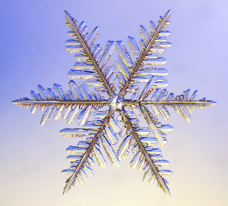
When someone talks about snowflakes, they often mean snow crystals, which is the more scientific way of describing these magnificent structures. A snow crystal is a single crystal of ice, whereas snowflakes could mean that, a few snow crystals stuck together or many snow crystals known as ‘puff balls’ that float down in the air in the cold seasons. These crystals are a precise, often hexagonal collection of frozen water molecules.
How do they form?
Snow crystals are water vapour that directly condenses into ice inside of clouds. Liquid water that freezes after leaving a cloud is known as sleet. A hexagonal seed crystal is first formed on a tiny particle, which serves as a base for the snow crystal. Branches then sprout whilst it is moving about in the cloud, experiencing different changes in temperature and humidity which affect the outcome of the snowflake. Contrary to popular belief, snow crystals are often not symmetrical and perfect. The exact shape is determined by the exact path it took inside the clouds, and as all arms experienced the same changes they turn out similar. However, this does not mean snow crystals are all identical. Irregular ones are the most common, yet near-identical snowflakes are the most sought after by photographers.
Why are all snow crystals unique?
As no two snow crystals take the same path in clouds when they form, no two look the same. Scientists have been able to make “identical-twin” snowflakes by exposing seed crystals to nearly identical weather conditions, mimicking what it would be like if two snow crystals fell together from the clouds.
There is still much mystery surrounding snowflakes. One thing that is for certain, is that they are truly remarkable products of nature.
 Sixty Second Science