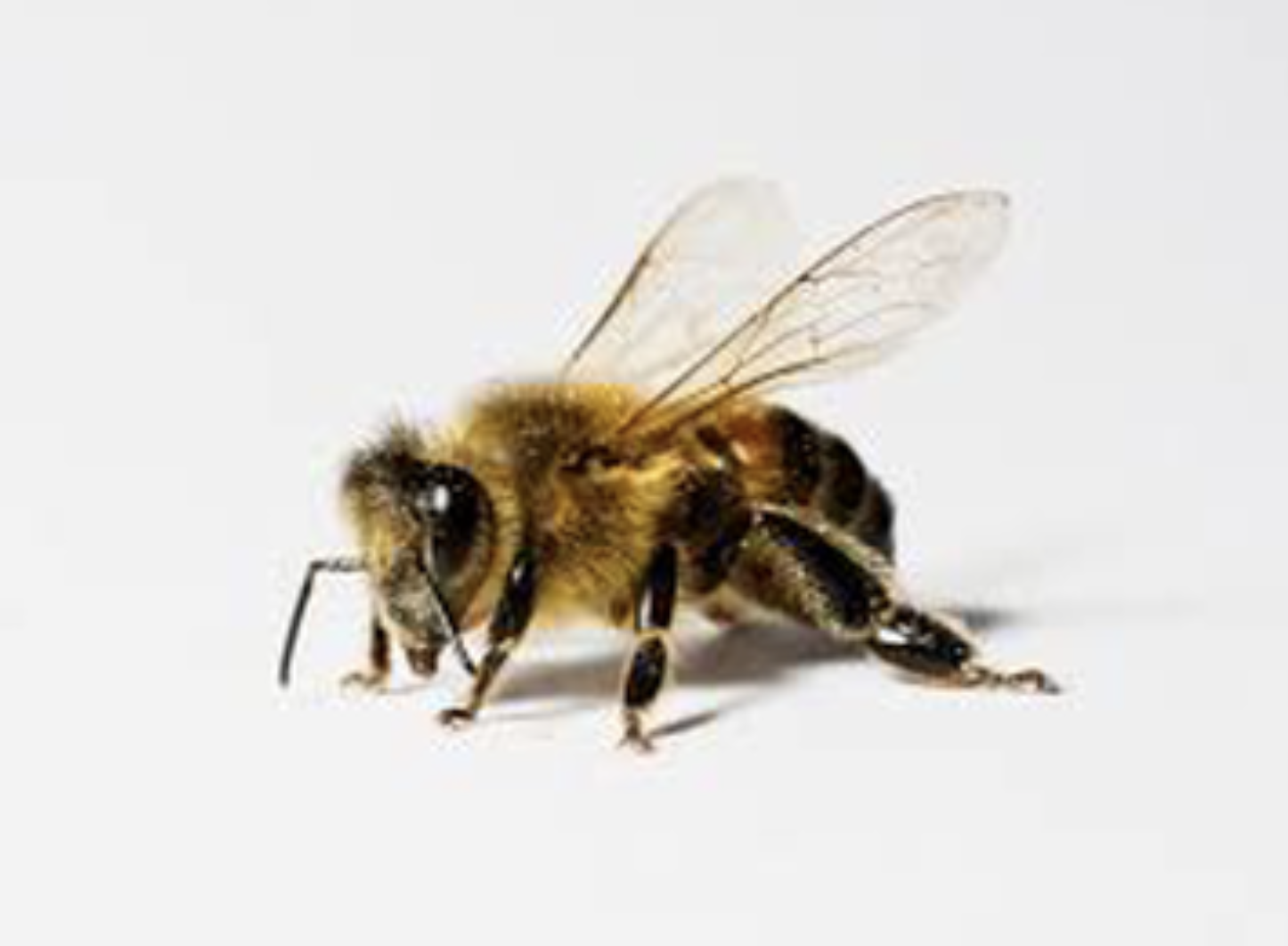
We’ve all encountered a bee once in our life, either by their irritating ‘buzz’ or by their sting, where venom is pumped into your veins as a final defence. You may know most about honeybees or bumblebees, there are actually approximately 20,000 species of bees worldwide and they all have one primary feature: to pollinate.
Pollination may seem like a process obsolete to humans, in a world where food comes from the supermarket, yet the biggest statistic when it comes to bees is that every third bite of something you ate, a bee probably helped to make it. From your fruits to vegetables and even your nuts, it all was due to bees and pollination. Professional beekeepers carry commercial bees to be used in farms to pollinate crops. Yet we often take these bees for granted. When 70% of your staple crops and food were pollinated by a bee it’s something we often look aside; but with bee colonies declining, a world without bees may be possible. As Einstein said, “If all the bees died out, humans would soon follow”.
In addition, bees are undeniable contributors to the economy with their global worth being $265B, so why are they leaving? What is happening to the world’s bees?
This is called Colony Collapse Disorder. It’s seen 1/3 of bees “mysteriously” leaving their hives and millions dying out. In the US alone, there were 5 million hives in 1988, however, only 2.5 million in 2016 remain. It is believed many factors are contributing to this; from stress due to human intervention, pesticides, mites and more. Parasites are microscopic mites that affect the trachea (breathing tubes) of the bees. Here, they lay their eggs and feed off the fluids of the bees, spending their entire lives inside them thus weakening the bees considerably. Or the Varroa Destructor, whose name is suiting to its purpose.
However, these circumstances aren’t enough to explain the decline of bees on this scale, as these can often be managed and overcome. Over the last few decades, new pesticides have been introduced that are deadly to bees. Neonicotinoids, a chemical similar to nicotine was approved in the 1990s as an alternative to other pesticides. It attacks insects by harming their nervous systems, today being the most widely used insecticide on the planet. Neonicotinoids were used on 95% of wheat and similar crops and also on pretty much all the fruits and vegetables you eat. Bees pick up the toxin while collecting pollen which is brought back into the hive. In high enough doses it can cause convulsions, paralysis and death for the entire hive. In smaller doses, it can lead to bees forgetting how to navigate the world meaning the stray far from the hive and die alone. If it happens often enough the hive can lose its ability to sustain itself.
This is the colony collapse syndrome and we need to invest more to deal with this
 Sixty Second Science